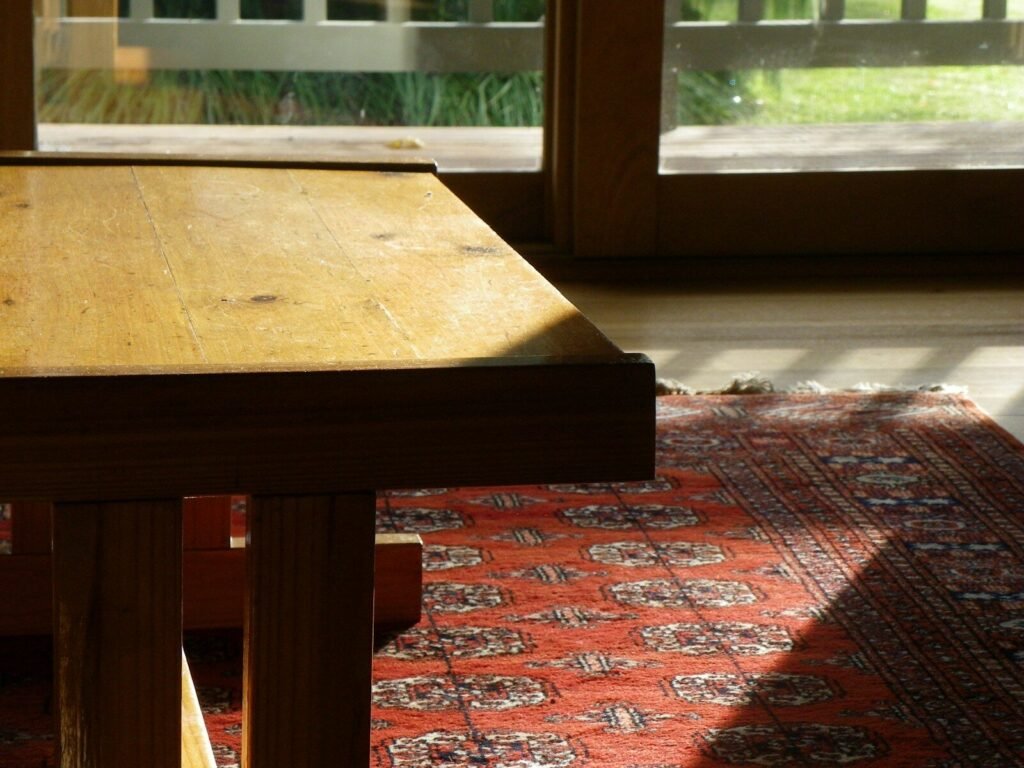
Furniture is the use where people ask for a species when what they actually need is a set of boards. “I need some oak” and “I’m building a table” are different requests, and only one of them gets you a table you’ll be happy with in a year.
The species matters, obviously. But the thing that decides whether the finished piece looks right is whether the boards belong together.
Timber choices for furniture
| Timber | What to know |
|---|---|
| American White Oak | A common first choice for furniture and joinery. Hard-wearing and takes a finish well. It works well, though fast-grown stock is harder to work than slow-grown. A safe choice for tables, shelving and pieces that get daily use. TRADA rates its movement as medium, but it shrinks a lot from green and flat-sawn boards are less stable, so allow for movement in wide panels. |
| Ash | Pale, straight-grained and tough, tougher and more resistant to splitting than oak. The choice when you want an oak-like grain in a paler timber. Watch the finishing: ash is ring-porous, and its large open pores soak up stain and darken more than the wood around them, so seal or fill the grain first if you want even colour. Not durable, so indoor use only. |
| Beech | Hard, close-grained and usually inexpensive, and the classic timber for workbenches, jigs and internal furniture. It machines well. TRADA rates its movement as large, so design for that. Keep it indoors: TRADA classes it as not durable. |
| Sapele & Utile | The pair that gets confused constantly, and they are very similar woods. Sapele is a little harder and is the more strongly figured of the two, often with a ribbon stripe; utile is usually plainer, so boards look more consistent across a run. Both are golden to reddish brown, and both are used where you want a mahogany-like look. |
| Walnut | One of the dearer furniture timbers. Dark and easy to work when the grain is straight, though figured boards can tear out. Colour varies a great deal, from pale brown to dark chocolate, and it tends to lighten over time, which is why the matched set matters most here. |
Buying boards, not a board
This is the distinction that decides a furniture project.
For a single piece (a box, a turning, one panel) you can buy any decent board and work with what you get. For anything with several visible components, such as a table top, a set of drawers or a run of shelving, you need boards from similar stock that will move and age together.
Why it matters: two boards of the same species can differ in colour, grain and how much they move. A flat-sawn board moves more across its width than a quarter-sawn one, and a board that’s wetter than its neighbours will keep shrinking after you’ve built with it. Build a tabletop out of three mismatched boards and it can go patchy, or pull itself out of flat because the boards are moving at different rates. Build a run of drawer fronts out of mismatched stock and it looks like two different jobs.
So the ask isn’t “some oak”. It’s “a set of boards for a tabletop, matched where possible”. It’s a specific request, and it’s worth making at the outset rather than discovering the problem halfway through.
Practical notes
Sizes and thickness
- Table tops: usually 27mm to 40mm finished thickness. Remember planed timber comes out smaller than rough sawn, so specify the finish size you need.
- Legs and frames: 40mm and up, often in square section. Buy oversize if you’re machining a taper or a profile.
- Drawers: solid fronts usually 20mm or more; sides much thinner, often 8mm to 12mm.
- Shelving: thickness is driven by span, not appearance. See the shelving page for that.
Movement
All solid timber moves across the grain with the seasons. For furniture, that means allowing for it in the design rather than fighting it: table tops fixed so they can move, panels floating in frames, and no wide board glued and screwed down hard at every point. A piece designed this way is far more likely to stay flat and free of splits.
Finishing
Ring-porous hardwoods, oak and ash especially, have large open pores that take stain more heavily than the wood around them. If you’re staining, seal or fill first. Many makers simply oil hardwood furniture, which also makes later repair straightforward. Walnut is rarely stained at all.
Buying rough sawn vs planed
Rough sawn is cheaper and gives you more to work with, but you need the machinery and the time. Planed and thicknessed costs more and saves a step. For a one-off piece, planed-to-size is often the sensible buy; for a run of components, rough sawn plus your own machining usually wins. Either way, work from the size you need to end up with, and allow for planing and waste on top.
If you’re cutting a list, the timber volume calculator is a quick way to check what a set of components actually adds up to before you buy. Species details are on the oak, ash, beech, sapele, utile and walnut pages.
Sources
- TRADA: Oak, American white (moderately durable, medium movement, working varies with growth rate, takes stain and polish)
- TRADA: Ash, European (tougher and more splitting-resistant than oak, not durable, medium movement)
- TRADA: Beech, European (not durable, large movement, works readily, interior furniture use)
- The Wood Database: White oak (high shrinkage, flat-sawn boards less stable, hardness)
- The Wood Database: Sapele (colour, figure, hardness, utile as a similar but plainer wood)
- The Wood Database: Black walnut (colour range, workability, rarely stained)
- Hardwood Floors: Species specs, black American walnut (walnut’s tendency to lighten)
- Fine Woodworking: An A to Z of making and fitting drawers (drawer front and side thicknesses)