
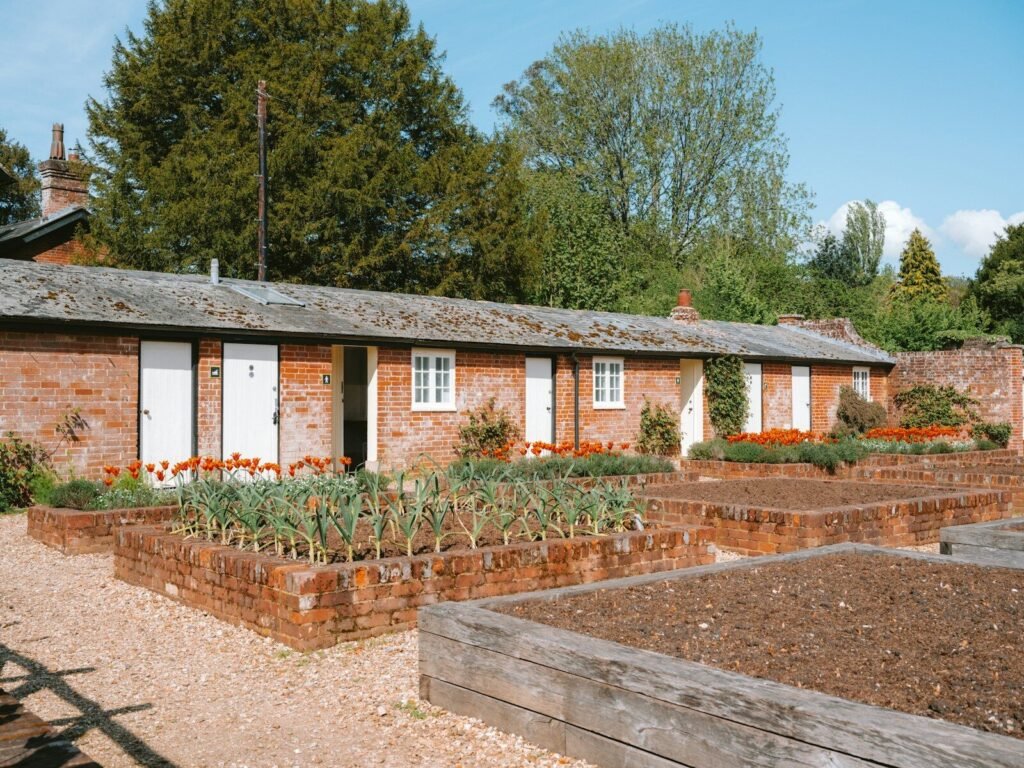
Sleepers are the easy way to build a raised bed, a retaining edge or a run of garden steps. The decision that matters is what the sleeper is and what it has been treated with, because that decides how long it lasts in the ground and whether it belongs anywhere near food or children.
The second decision is height. A bed or an edge a sleeper or two high is a garden job. A sleeper wall holding back a bank of soil is a structure, and it needs treating like one.
Timber choices for sleepers
Most garden sleepers are sold at around 200 x 100mm in 2.4m lengths, which is the size to ask a yard for when you’re comparing. Three kinds do most of the work, and one kind is best left alone.
| Timber | What to know |
|---|---|
| New oak sleepers | Usually sawn green (unseasoned), so expect them to check, split and move as they dry, and to bleed dark tannin stains for the first season or two. The heartwood is rated durable to slightly durable and the paler sapwood band is not durable, so a sleeper with a lot of sapwood will soften along that edge first. Untreated, which makes oak the usual pick for a food bed where you’d rather not use preservative. |
| New treated softwood sleepers | Pine or similar, pressure treated. For anything touching or buried in soil, ask for treatment to Use Class 4 (UC4) to BS 8417, the ground-contact class. A sleeper treated for above-ground use (UC3) will fail early in soil. Lighter than oak, and the RHS calls them an economical alternative that lasts many years. |
| Tropical hardwood sleepers (azobé/ekki) | Very dense, durable heartwood with a long record as sleepers, posts and timber in the ground or fresh water. It’s hard on tools and needs predrilling for every screw. Ask the yard for its provenance. See the ekki page. |
| Reclaimed railway sleepers | Old track sleepers were commonly creosoted, and creosoted wood has legal limits on where it can go in a garden (below). If a reclaimed sleeper smells of tar or goes sticky and black in warm sun, treat it as creosoted. |
Creosote: the legal point
Creosote-treated wood, second-hand railway sleepers included, must not be used inside buildings, in toys or playgrounds, in parks, gardens and outdoor leisure areas where there’s a risk of frequent skin contact, for garden furniture, or for containers used to grow plants or anything that could contaminate food. The list comes from the Creosote Regulations 2003 and is now carried in REACH Annex XVII (entry 31). The RHS goes further and says creosoted railway sleepers are no longer permitted in the garden.
HSE renewed creosote’s approval in 2026 with tighter conditions. From 1 April 2027, creosote-treated timber may only be placed on the GB market for railway sleepers, transmission poles and safety-critical fencing, and the required labelling states that second-hand creosoted articles treated after 2002 may not be marketed to the general public. Don’t use creosoted sleepers for a bed, a seat edge or steps. If some are already in place, wear gloves to handle them.
Oak, treated softwood or hardwood?
Oak if you’re growing food and want no preservative. Pick sleepers with as little sapwood as possible, accept that they’ll split and colour, and use stainless fixings (oak’s tannin reacts with plain steel). The European oak page has more.
Treated softwood if you want value and lighter lifting. Insist on UC4. Every cut you make exposes untreated wood inside, so brush an end-grain preservative onto fresh cuts and drilled holes, and never put a cut end into the ground, even coated. The redwood page covers the timber itself.
Tropical hardwood for an edge or steps that take hard wear. Expect heavy lifting and slow, predrilled fixing.
Practical notes
Lining a bed for food growing
The RHS considers new treated sleepers fine for edible crops. If you’d rather keep soil off the wood, line the inside faces with heavy plastic sheet (old compost bags work), stapled to the sides. Line the sides only, so the base still drains.
Drainage
Build beds on free-draining ground. On a patio or other hard surface, drill plenty of drainage holes low in the sides. For a retaining edge, the soil behind it gets wet and heavy, so give the water a way out: free-draining gravel backfill behind the sleepers, a membrane to stop soil washing into the gravel, and a perforated pipe at the base on anything over about 400mm high.
Fixing
- Long timber screws or coach screws at the corners. The RHS method is to drill through the end sleeper into the next one at top and bottom and fix with long, heavy-duty coach screws. Long structural timber screws are the other common choice. Predrill oak and hardwood.
- Stagger the joints on beds more than one sleeper high, like brickwork, and add a vertical timber inside each corner to tie the courses together.
- Steel pins or posts stop a low edge sliding: lengths of steel bar driven through drilled holes into the ground, or galvanised steel posts designed for sleepers. Taller edges need proper posts set deep in the ground, not just pins.
- Use stainless or hot-dip galvanised fixings. Copper-based preservatives can corrode galvanised steel, so separate steel posts from treated timber with a damp-proof strip or coating.
Steps
Sleeper steps get slippery once algae takes hold, especially in shade. Keep every riser the same height, fix each tread so it can’t rock, and consider anti-slip strips on treads you’ll use in the wet.
When a retaining edge needs proper design
LABC advises that retaining walls should be designed by a competent structural engineer, and notes that one within 3.7m of a street can also need council approval under the Highways Act. As a guide, the Australian WoodSolutions design guide only covers timber garden walls up to 1m high on gentle slopes, and expects anything over 1m, or close to a building, to be engineered. Treat a metre as the ceiling for a DIY sleeper wall, and get it checked lower down if it’s holding back a drive, a path, a building or a neighbour’s ground. Planning rules on walls vary by council, so check with yours before building anything tall on a boundary.
Quantities
Sleepers are usually sold by the piece, so count lengths. The timber volume calculator helps if a yard quotes by the cubic metre.
Sources
- Wood Protection Association, Understanding Use Class 4 (WPA TW 8) (UC4 for ground contact including raised beds and soil retaining walls, 15-year default service life, treat freshly cut areas, never put cut ends in the ground)
- The Creosote (Prohibition on Use and Marketing) Regulations 2003 (places creosote-treated and second-hand wood must not be used, regulation 6)
- HSE, Decision document 2026-002: renewal of creosote (renewal from 1 April 2026; permitted uses from 1 April 2027; labelling condition that second-hand creosoted articles treated after 31 December 2002 may not be marketed to the public; gloves where skin contact is likely)
- RHS, How to make a raised bed (creosoted sleepers in gardens, treated softwood sleepers, lining, drainage holes on hard surfaces, coach screw corners, staggered joints)
- RHS, Growing veg in raised beds (new sleepers and treated wood fine for edible crops, lining optional)
- Timber Development UK, Oak, European (heartwood durable to slightly durable, sapwood band, splits and checks as it dries, sleepers listed as a use)
- LABC, How building regulations may affect garden walls (retaining walls designed by a structural engineer, Highways Act approval within 3.7m of a street, drainage behind walls, check with the planning team)
- WoodSolutions, Technical Design Guide 41: Timber garden retaining walls up to 1m (1m scope, engineering over 1m or near buildings, gravel backfill, geotextile and drain pipe, galvanised posts and separation from copper-treated timber)


